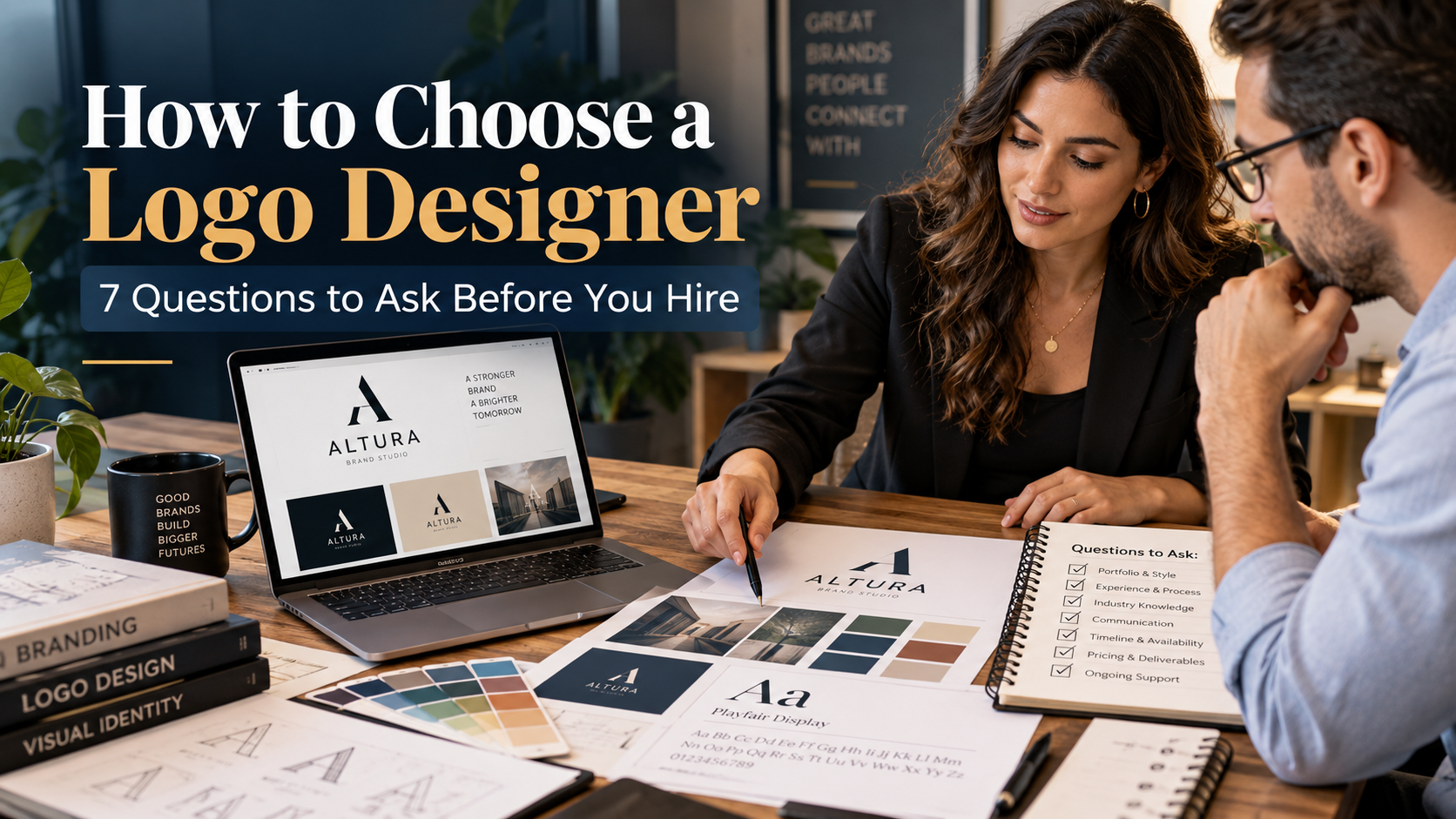
Choosing a logo designer is about more than finding someone who can create an attractive symbol. Your logo becomes a key part of your brand identity, appearing on your website, social media, packaging, business cards, advertisements, and other customer touchpoints.
The right designer should understand your business, audience, competitors, and long-term branding goals not simply create a graphic that looks good.
If you are comparing logo design services USA, freelancers, agencies, or full logo design and branding services, asking the right questions before hiring can help you make a confident decision.
Here are seven important questions to ask before choosing a logo designer.
1. Have You Designed Logos for Businesses Like Mine?
Start by looking at the designer’s experience and portfolio.
A designer who has worked with businesses in your industry may already understand common customer expectations, competitors, and visual styles. However, industry experience should not be the only factor. A good designer should also demonstrate versatility.
Compare: Industry experience vs. design versatility
| Industry Experience | Design Versatility |
| Understands your market | Can create different visual styles |
| Familiar with your audience | Avoids repetitive design solutions |
| May know industry conventions | Can make your brand distinctive |
Real-life example:
Imagine you are launching a premium skincare company. A designer whose portfolio consists entirely of gaming logos may have strong design skills, but you may prefer someone who has experience creating sophisticated, minimal, and premium-looking identities.
Ask to see relevant portfolio examples, not just the designer’s favorite projects.
2. What Is Your Logo Design Process?
A professional logo designer should be able to explain how an idea moves from your business requirements to the final design.
A typical process may include:
- Brand discovery and research
- Competitor and audience analysis
- Creative direction or mood boards
- Initial logo concepts
- Feedback and revisions
- Final design development
- Delivery of logo files and brand assets
This process matters because effective brand identity development involves strategy, not just visual decoration.
Design-first vs. strategy-first
Design-first:
The designer starts sketching ideas immediately based on a short conversation.
Strategy-first:
The designer first learns about your positioning, audience, personality, competitors, and goals before developing concepts.
For example, a law firm may want to communicate trust and professionalism, while a children’s clothing company may want to appear playful and approachable. Both need logos, but their visual strategies should be very different.
3. What Is Included in Your Logo Design Package?
Do not compare designers based only on price. Compare what you receive.
One designer may provide only a final PNG file, while another may provide multiple formats, variations, and supporting brand assets.
Before hiring, ask whether the package includes:
- Primary logo
- Secondary logo variation
- Black-and-white version
- Horizontal and vertical versions
- Vector files such as AI, EPS, or SVG
- Web-ready PNG files
- Print-ready files
- Color palette
- Typography recommendations
- Basic brand guidelines
Cheap logo vs. complete brand solution
A low-cost logo can be suitable for a small personal project or temporary business. However, a company planning long-term growth may need a broader identity system.
This is where logo design and branding services can provide additional value. Instead of treating the logo as an isolated graphic, the designer develops a visual system that can remain consistent across different platforms.
4. How Many Concepts and Revisions Are Included?
Feedback is an important part of the design process, but unlimited revisions can create confusion and delays.
Ask:
- How many initial concepts will I receive?
- How many revision rounds are included?
- What happens if I need additional revisions?
- How is feedback collected?
- Who will manage communication?
Example
Suppose Designer A provides one concept with unlimited revisions, while Designer B provides three carefully researched concepts and two revision rounds.
The second option may provide a clearer creative direction because you are evaluating multiple strategic ideas rather than repeatedly changing one concept.
The important point is to understand what the revision process looks like before you pay.
5. Will I Own the Final Logo?
Ownership and usage rights should be clearly explained in your agreement.
Ask whether you will receive full rights to the final approved logo and when those rights transfer to you.
Also ask about:
- Source files
- Commercial usage
- Trademark considerations
- Font licensing
- Stock graphics or templates
- Restrictions on modifying the logo
This is especially important for businesses that plan to register or trademark their identity.
A professional designer should explain what is included in the agreement instead of leaving ownership questions unclear.
6. Can You Design a Logo That Works Across Different Platforms?
Your logo will rarely appear in only one place.
It may need to work on:
- Websites
- Mobile screens
- Social media profiles
- Business cards
- Signage
- Product packaging
- Promotional materials
- Merchandise
A logo that looks excellent on a large website banner may become unreadable when reduced to a small social media profile image.
Good logo design vs. platform-dependent design
Good logo system:
Recognizable at different sizes and adaptable to different backgrounds.
Platform-dependent logo:
Looks good in one specific format but loses clarity when resized or reproduced.
Ask your designer to demonstrate how the logo will work in real-world applications.
7. Can You Help With Branding Beyond the Logo?
A logo is only one part of a brand identity.
If you want a consistent customer experience, you may also need help with:
- Brand colors
- Typography
- Visual guidelines
- Social media graphics
- Packaging direction
- Business stationery
- Brand messaging
- Overall visual identity
This is where brand identity development becomes important.
Logo vs. brand identity
Think of your logo as the face of your business.
Your brand identity is the complete appearance and visual language of that business.
For example, a coffee shop may have a logo featuring a coffee cup. But its brand identity could also include earthy colors, specific typography, packaging designs, photography style, signage, and social media visuals.
A strong identity makes all of these elements feel connected.
How to Compare Logo Designers Before Hiring
When comparing two or more designers, create a simple checklist:
| Factor | Designer A | Designer B |
| Relevant portfolio | ✓ | ✓ |
| Clear design process | ✓ | — |
| Multiple concepts | ✓ | ✓ |
| Defined revisions | ✓ | — |
| Source files included | ✓ | ✓ |
| Usage rights explained | ✓ | — |
| Brand strategy available | ✓ | ✓ |
| Fits your budget | ✓ | ✓ |
This makes the decision more objective than simply choosing the designer with the lowest quote.
The cheapest option may not provide everything your business needs, while the most expensive option may include services you do not require.
Focus on fit, process, deliverables, communication, and long-term value.
Final Checklist: Questions to Ask Before You Hire
Before signing an agreement, make sure you can answer these seven questions:
- Does the designer have relevant portfolio experience?
- What is their logo design process?
- What exactly is included in the package?
- How many concepts and revisions are provided?
- Who owns the final logo?
- Will the logo work across different platforms?
- Can the designer support broader brand identity needs?
Choosing a logo designer becomes much easier when you look beyond the logo itself. The right professional should be able to connect design decisions with your business goals and create an identity that can grow with your company.
Whether you are comparing logo design services USA, independent designers, or complete logo design and branding services, ask these questions before hiring. A clear process and well-defined expectations can help you build a stronger visual identity from the beginning.