
What Is Brand Identity?
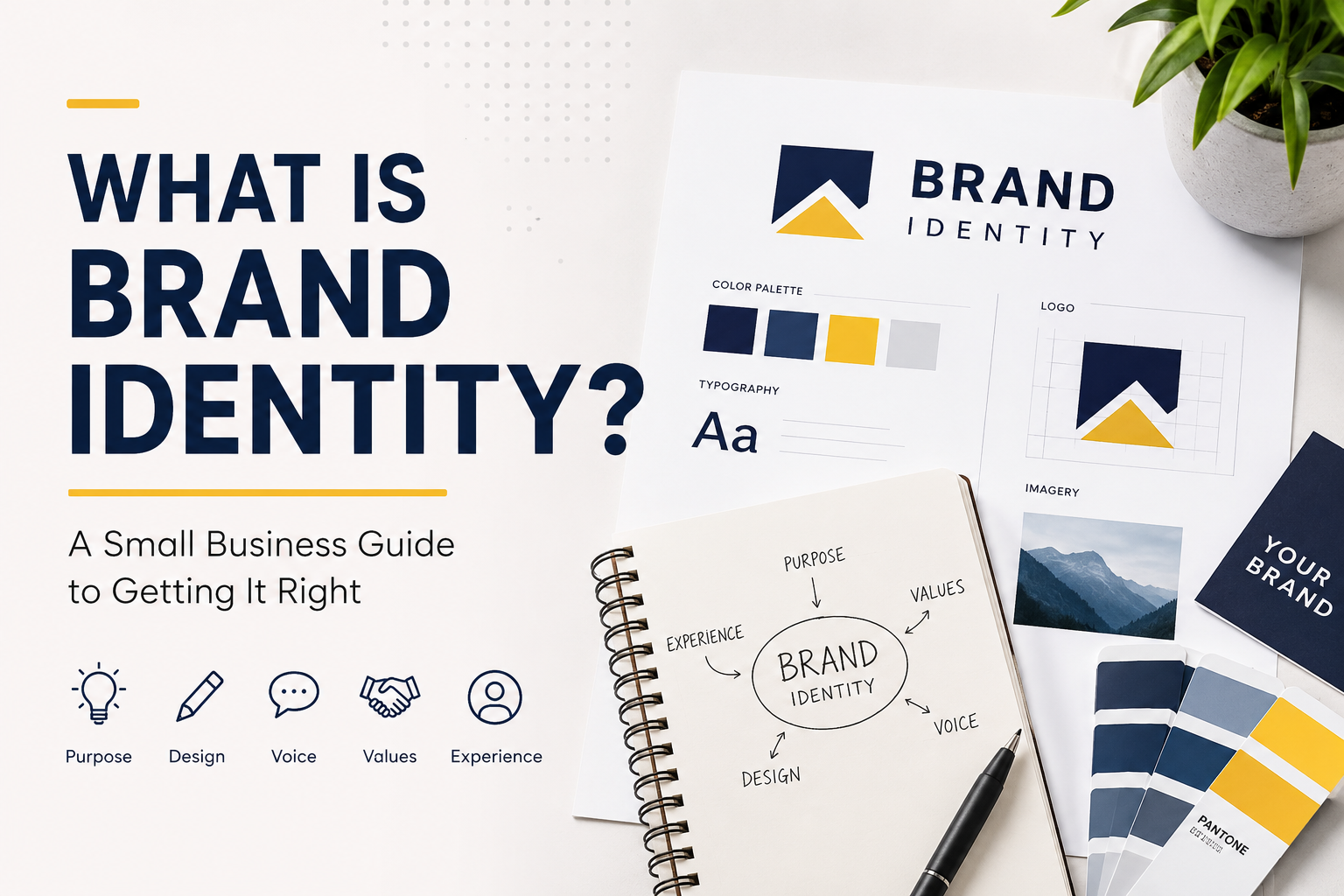
Brand identity is the collection of visual, verbal, and emotional elements that represent a business. It includes your logo, colors, typography, messaging, voice, values, and overall customer experience.
In simple terms, brand identity is how your business wants to be recognized and remembered.
A strong brand identity helps customers instantly identify your business, trust your products or services, and remember you over competitors.

Why Brand Identity Matters for Small Businesses
Many small businesses believe branding starts and ends with a logo. In reality, your logo is only one part of your identity.
A consistent brand identity helps you:
- Build customer trust
- Increase brand recognition
- Differentiate from competitors
- Create emotional connections
- Improve marketing consistency
- Encourage repeat purchases
- Support premium pricing
Customers often choose brands they recognize over unfamiliar alternatives even when products are similar.
Brand Identity vs Brand Image
People often confuse these two terms.
| Brand Identity | Brand Image |
| Created by your business | Created by customers |
| Includes logo, colors, messaging, voice | Includes customer opinions and perceptions |
| You control it | Customers shape it |
| Represents your intended personality | Reflects how people actually see your brand |
Simple explanation:
- Brand Identity = Who you say you are.
- Brand Image = What customers believe about you.
The Core Elements of Brand Identity
Creating a memorable identity requires multiple components working together.
1. Brand Purpose
Why does your business exist beyond making money?
Your purpose gives meaning to your brand and influences every decision.
Example:
Helping local businesses grow through affordable digital marketing.
2. Brand Mission
Your mission explains what your company does every day to fulfill its purpose.
Example:
We provide practical marketing solutions that help small businesses attract more customers.
3. Brand Values
Values define what your business stands for.
Common examples include:
- Honesty
- Innovation
- Sustainability
- Quality
- Customer-first service
- Transparency
4. Brand Personality
If your business were a person, how would it behave?
Examples:
- Friendly
- Professional
- Bold
- Luxury
- Playful
- Reliable
- Innovative
Your personality should remain consistent across your website, emails, advertisements, and social media.
5. Visual Identity
Visual identity is what customers immediately notice.
It includes:
- Logo
- Brand colors
- Typography
- Icons
- Photography style
- Graphics
- Website design
- Packaging
Consistency makes your brand easier to recognize.
6. Brand Voice
Your voice is how your business communicates.
Examples:
Professional:
We deliver reliable solutions designed for growing businesses.
Friendly:
Let’s grow your business together.
Luxury:
Crafted with exceptional attention to detail.
Your voice should stay consistent across all platforms.
7. Customer Experience
Every interaction contributes to your identity.
This includes:
- Website usability
- Customer support
- Delivery experience
- Product quality
- Emails
- Social media interactions
Brand identity isn’t only what people see—it’s also what they experience.
How to Create a Strong Brand Identity
Follow these practical steps.
Step 1: Know Your Target Audience
Understand:
- Age
- Interests
- Problems
- Goals
- Buying behavior
- Preferred communication style
The better you understand customers, the stronger your branding becomes.
Step 2: Research Your Competitors
Look at:
- Visual branding
- Messaging
- Pricing
- Customer reviews
- Website design
- Social media
Find opportunities to stand out instead of copying others.
Step 3: Define Your Brand Position
Ask yourself:
Why should customers choose your business instead of competitors?
Create one clear positioning statement.
Example:
Affordable website design specifically for local service businesses.
Step 4: Create Your Visual Identity
Develop consistent:
- Logo
- Color palette
- Typography
- Icons
- Design style
- Templates
Use the same branding across every customer touchpoint.
Step 5: Develop Brand Messaging
Create messaging for:
- Homepage
- About page
- Product descriptions
- Social media
- Email marketing
- Advertising
Keep the tone consistent.
Step 6: Build Brand Guidelines
Document your branding rules.
Include:
- Logo usage
- Colors
- Fonts
- Tone of voice
- Writing style
- Image style
- Social media standards
Brand guidelines help maintain consistency as your business grows.
Examples of Strong Brand Identity
Successful businesses are instantly recognizable because they maintain consistency.
Characteristics include:
- Consistent visual design
- Clear messaging
- Memorable customer experiences
- Strong emotional connection
- Reliable quality
- Distinct personality
Small businesses can achieve the same consistency without a large marketing budget.
Common Brand Identity Mistakes
Avoid these common problems.
Inconsistent Design
Using different colors, fonts, and logos across platforms creates confusion.
Copying Competitors
Your brand should be unique, not a replica.
Ignoring Customer Experience
Great visuals cannot compensate for poor service.
Changing Branding Too Often
Frequent changes reduce recognition.
No Clear Voice
Switching between professional and casual messaging weakens consistency.
Benefits of a Strong Brand Identity
Businesses with consistent branding often experience:
- Higher customer trust
- Better recognition
- Increased referrals
- Improved loyalty
- Stronger online presence
- More effective marketing
- Greater long-term growth
Strong branding supports every marketing effort you make.
Brand Identity Checklist
Use this checklist to evaluate your business.
- Clear brand purpose
- Defined mission
- Strong values
- Consistent logo
- Recognizable color palette
- Professional typography
- Consistent messaging
- Defined brand voice
- Positive customer experience
- Brand guidelines document
If you checked most of these, your brand identity is likely on the right track.
Frequently Asked Questions
What is brand identity in simple words?
Brand identity is how a business presents itself through its logo, colors, messaging, personality, and customer experience so customers can recognize and remember it.
Is a logo the same as brand identity?
No. A logo is only one part of brand identity. Brand identity also includes messaging, voice, values, visuals, and customer experience.
Why is brand identity important?
Brand identity builds trust, improves recognition, helps businesses stand out from competitors, and creates long-term customer loyalty.
Can small businesses build a strong brand identity?
Yes. Small businesses can create powerful brands by maintaining consistent visuals, messaging, customer experiences, and values across all channels.
How long does it take to build a brand identity?
Creating a brand identity can take weeks or months, while building brand recognition usually takes consistent marketing over time.
Final Thoughts
Brand identity is much more than a logo or color palette. It’s the complete experience customers associate with your business from your visual design and messaging to the way you communicate and deliver value.
For small businesses, investing in a clear and consistent brand identity can improve recognition, strengthen customer trust, and support long-term growth. By understanding your audience, defining your values, and maintaining consistency across every touchpoint, you create a brand that people remember and choose with confidence.