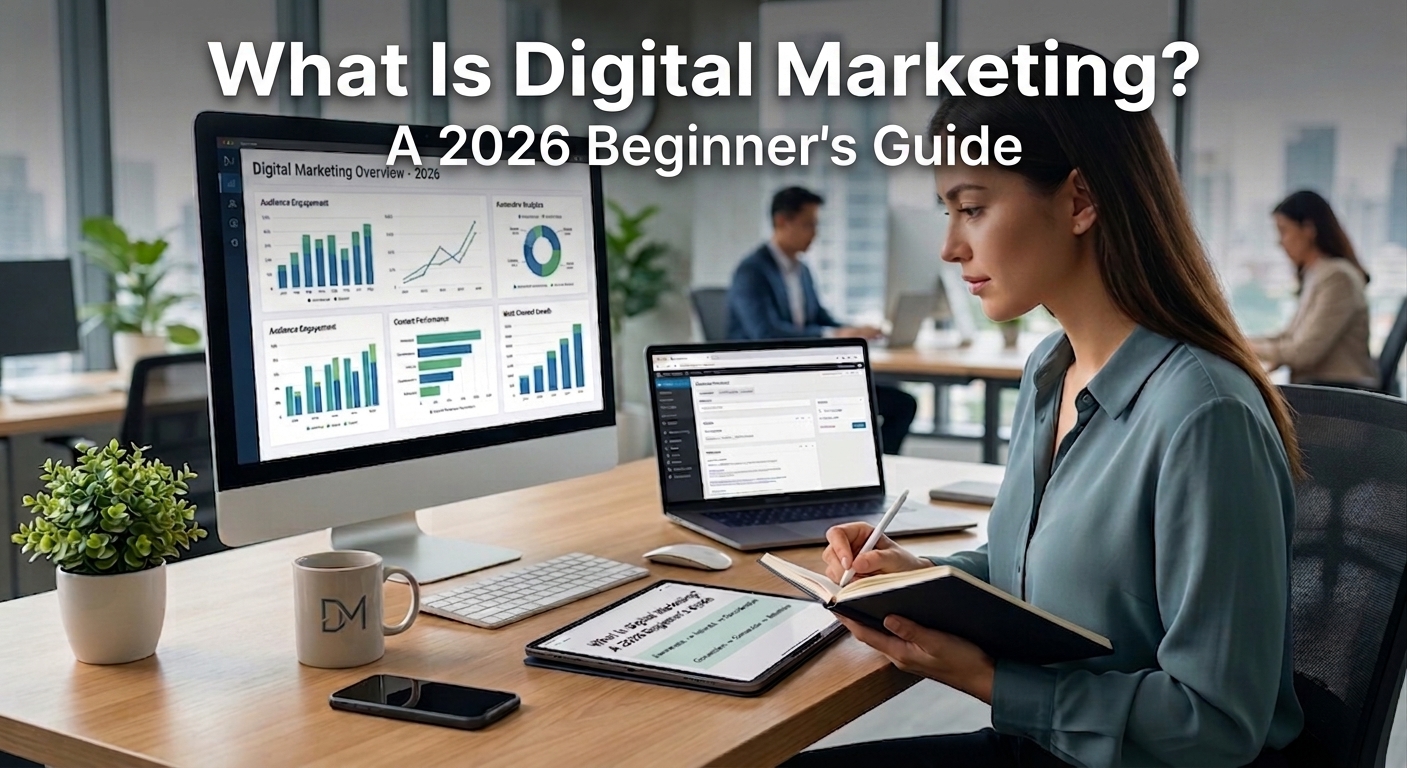
Digital marketing is the process of promoting products, services, brands, or businesses through digital channels such as search engines, websites, social media, email, online advertising, and mobile platforms.
In simple words, digital marketing means using digital technology to reach potential customers, build awareness, generate leads, increase sales, and retain existing customers.
For example, when someone searches Google for a product, watches a YouTube review, sees a social media advertisement, visits a company’s website, or receives a promotional email, they are interacting with digital marketing.
This guide explains what digital marketing is, how it works, its main types, benefits, examples, and the difference between digital marketing and traditional marketing.
What Is Digital Marketing?
Digital marketing is marketing that uses digital channels to connect businesses with their target audience.
Some common digital marketing channels include:
- Search engines
- Websites and blogs
- Social media
- Online advertising
- Video platforms
- Mobile apps
- Messaging platforms
The main goal is not simply to get more visitors. A successful digital marketing campaign aims to move people through customer journey:
Awareness → Interest → Consideration → Conversion → Retention
For example, a customer may discover a company through Google, read its blog, follow it on social media, compare its products, make a purchase, and later receive an email encouraging another purchase.
All of these interactions can be part of digital marketing.
How Does Digital Marketing Work?
Digital marketing generally works by attracting the right audience, providing useful information, and encouraging people to take a desired action.
- Attract
Businesses first need to get discovered.
They can use:
- SEO
- Social media
- Blog content
- YouTube
- PPC advertising
- Influencer marketing
- Engage
After attracting visitors, businesses provide useful content to build interest and trust.
Examples include:
- Guides
- Videos
- Product demonstrations
- Case studies
- Social media posts
- Email newsletters
- Convert
The next goal is conversion. A conversion could be:
- Buying a product
- Requesting a quote
- Booking an appointment
- Filling out a form
- Downloading a resource
- Signing up for an email list
- Retain
Digital marketing also helps businesses maintain relationships with existing customers through email, useful content, loyalty programs, remarketing, and customer support.
What Are the Main Types of Digital Marketing?
Digital marketing includes several different marketing methods.
1. Search Engine Optimization (SEO)
SEO is the process of improving a website and its content to increase its visibility in organic search results.
For example, a website selling running shoes might publish an article targeting the search query “best running shoes for beginners.”
SEO can involve keyword research, search intent, content optimization, technical SEO, internal linking, and improving the overall user experience.
2. Pay-Per-Click (PPC)
PPC is paid advertising where advertisers generally pay when users interact with their advertisements.
Search advertising is a common example. A company can pay to appear when someone searches for keywords related to its products or services.
SEO vs PPC: SEO focuses on earning organic visibility, while PPC provides paid visibility.
3. Content Marketing
Content marketing involves creating useful and relevant content for a target audience.
Examples include:
- Blog posts
- Videos
- Guides
- Case studies
- Ebooks
- Infographics
- Podcasts
The goal is to answer questions, solve problems, build trust, and support the buying journey.
4. Social Media Marketing
Social media marketing uses platforms such as social networks and video-sharing platforms to reach and engage audiences.
Businesses can use social media for organic content, paid advertising, customer support, product launches, and community building.
Social media marketing vs digital marketing: Social media marketing is one part of digital marketing. Digital marketing includes many other channels, including SEO, PPC, email, and content marketing.
5. Email Marketing
Email marketing involves sending useful or promotional messages to subscribers and customers.
Common examples include:
- Welcome emails
- Newsletters
- Promotional campaigns
- Abandoned-cart emails
- Product recommendations
- Customer follow-ups
Email can help businesses build long-term relationships with their audience.
Digital Marketing vs Traditional Marketing
Digital marketing and traditional marketing both aim to reach customers, but they use different channels.
| Digital Marketing | Traditional Marketing |
| Websites, search, social media, email | TV, radio, newspapers, magazines |
| Highly measurable | Measurement can be more difficult |
| Often allows detailed targeting | Often reaches broader audiences |
| Campaigns can be changed quickly | Changes can take longer |
| Interactive | Usually less interactive |
| Can reach global audiences | Often strong for local or mass-market campaigns |
Which Is Better?
Neither is automatically better.
Digital marketing can be especially useful for businesses that want measurable online campaigns and targeted audiences. Traditional marketing can still be effective for television, print, radio, outdoor advertising, events, and local awareness.
Many successful businesses combine both.
Why Is Digital Marketing Important?
Digital marketing is important because people increasingly use digital channels to research businesses and make purchasing decisions.
Some major benefits include:
Wider Reach
A business can potentially reach customers outside its local area.
Better Targeting
Digital platforms can help marketers reach specific audiences based on factors such as interests, search behavior, location, or previous interactions.
Measurable Results
Businesses can track traffic, clicks, leads, conversions, sales, and other performance indicators.
Flexible Budgets
Businesses can choose marketing channels and budgets according to their goals and resources.
Direct Engagement
Social media, email, websites, and other digital channels allow businesses to communicate directly with customers.
Digital Marketing Examples
Consider a local restaurant.
It could use digital marketing by:
- Creating a website.
- Optimizing its website for local searches.
- Publishing photos and videos on social media.
- Running paid search advertisements.
- Collecting customer reviews.
- Sending promotional emails to subscribers.
An online store could use SEO to attract organic traffic, PPC to generate immediate visibility, social media to build awareness, and email marketing to encourage repeat purchases.
A B2B software company might publish educational guides, generate leads through its website, use paid advertising, and nurture prospects through email.
The channels differ, but the basic objective remains the same: reach the right people and encourage valuable actions.
How to Start Digital Marketing as a Beginner
If you’re new to digital marketing, don’t try to learn every channel at once.
Start with these steps:
Step 1: Understand Your Audience
Learn who your customers are, what problems they have, and what information they need.
Step 2: Choose a Marketing Channel
Start with one area such as SEO, content marketing, social media, email, or PPC.
Step 3: Create Useful Content
Focus on answering real questions and solving real problems instead of creating content only to target keywords.
Step 4: Track Results
Monitor useful metrics such as website traffic, leads, conversions, sales, and customer acquisition costs.
Step 5: Improve
Use your data to identify what works and improve your campaigns over time.
Frequently Asked Questions About Digital Marketing
What is digital marketing in simple words?
Digital marketing means promoting a business, product, service, or brand through digital channels such as search engines, websites, social media, email, and online advertising.
What are the main types of digital marketing?
The main types include SEO, PPC, content marketing, social media marketing, email marketing, affiliate marketing, influencer marketing, video marketing, and mobile marketing.
Is digital marketing easy to learn?
The basic concepts are easy to understand, but becoming skilled takes practice. Beginners should start with one area and gradually learn additional channels.
What is the difference between SEO and digital marketing?
SEO is one part of digital marketing. SEO focuses mainly on improving organic search visibility, while digital marketing covers SEO, PPC, social media, email, content marketing, and other digital channels.
Can a small business use digital marketing?
Yes. Small businesses can use digital marketing to reach local or specialized audiences through SEO, social media, email, online advertising, content marketing, and other channels.
Final Thoughts
Digital marketing is the use of digital channels and technology to promote a business, reach customers, generate leads, increase sales, and build long-term customer relationships.
It includes SEO, PPC, content marketing, social media marketing, email marketing, video, affiliate marketing, and several other channels.
For beginners, the best approach is simple: understand your audience, choose the right channel, create useful content, measure your results, and keep improving.
As digital platforms and technology continue to evolve in 2026, the fundamentals remain the same: provide value, build trust, understand customer needs, and make it easy for people to take the next step.
Ready to Start Your Digital Marketing Journey?
Now that you understand what digital marketing is, how it works, and the different channels involved, it’s time to put the knowledge into practice. Whether you’re a business owner, marketer, freelancer, or beginner, the right digital marketing strategy can help you reach more people, generate qualified leads, and grow your business online.
Don’t know where to start? We’re here to help.
👉 Get in touch with our digital marketing experts today and discover the right strategy for your business.
[Get Started Today →] Contact Us